Heart of Illinois Country Heritage Shop
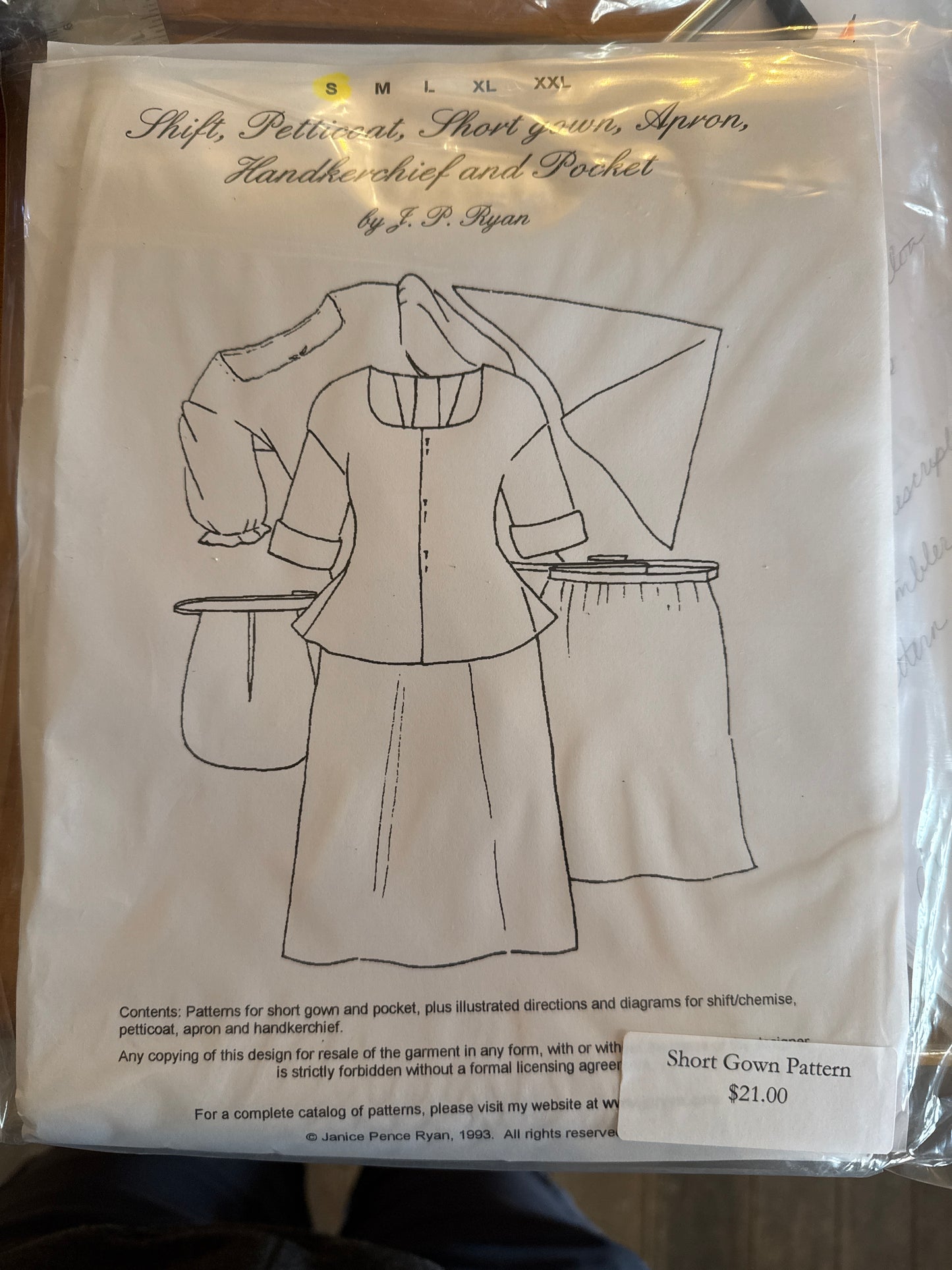
JP Ryan's Pattern Women's Shift, Petticoat, Short Gown, Apron, Handkerchief & Pocket Packet Pattern
JP Ryan's Pattern Women's Shift, Petticoat, Short Gown, Apron, Handkerchief & Pocket Packet Pattern
Couldn't load pickup availability
JP Ryan's Pattern Women's Shift, Petticoat, Short Gown, Apron, Handkerchief & Pocket Packet Pattern
Woman’s Basic Six Piece Wardrobe for Undress Wear
Short gown, shift, pocket, handkerchief, apron and petticoat. Six piece wardrobe contains patterns for short gown and pocket. Illustrated cutting diagrams and fully illustrated directions are provided for shift, handkerchief, petticoat, and apron. Available is sizes S (6-8) to XXL (22-24.)
Pattern recommended by Les Amis du Fort de Chartres Interpretive Program for authentic French Habitant reenactment.
From head to toe: Caps were essential to the 18th-century French woman: they protected the hair beneath them during daily work, gave women freedom from having to dress their hair in elaborate styles, and could be fancied up with ribbon as a fashion statement. A chemise (below-the-knee shift) and stockings tied with garters were the base layer of every outfit. Stays (boned garments mentioned in inventories) would have provided bust support. Pockets were tied around the waist for storing personal items beneath several petticoats, and over this the upper garment went on last — either a bedgown, a fitted jacket, or a full-length gown. A fichu (neck handkerchief) prevented sun exposure on the neck and chest, and an apron helped protect the clothes from dirt and stains. For shade, a straw or felt hat helped keep women cool. Footwear included wooden sabots, slip-on mules, and leather shoes with buckles. Mitts of cotton, wool or silk could be worn in all weather since the forearm and hand were left exposed by sleeves that stopped just below the elbow. Short and long cloaks with and without hoods added warmth.
Likely fibers: Shifts, fichus, and caps were commonly made of linen as fine as a woman could afford, but also could be made of cotton. Colorful woven stripes and printed indienne cotton (a floral pattern particular to the 18th century) appear in inventories where gowns are mentioned, while hard-wearing linen and wool were also used for petticoats, bedgowns, jackets, French aprons often had an added bib, and could be made of plain white linen or cotton, as well as woven stripes, checks, and indienne cotton.
Share