Heart of Illinois Country Heritage Shop
JP Ryan's Men's Waistcoat Pattern
JP Ryan's Men's Waistcoat Pattern
Couldn't load pickup availability
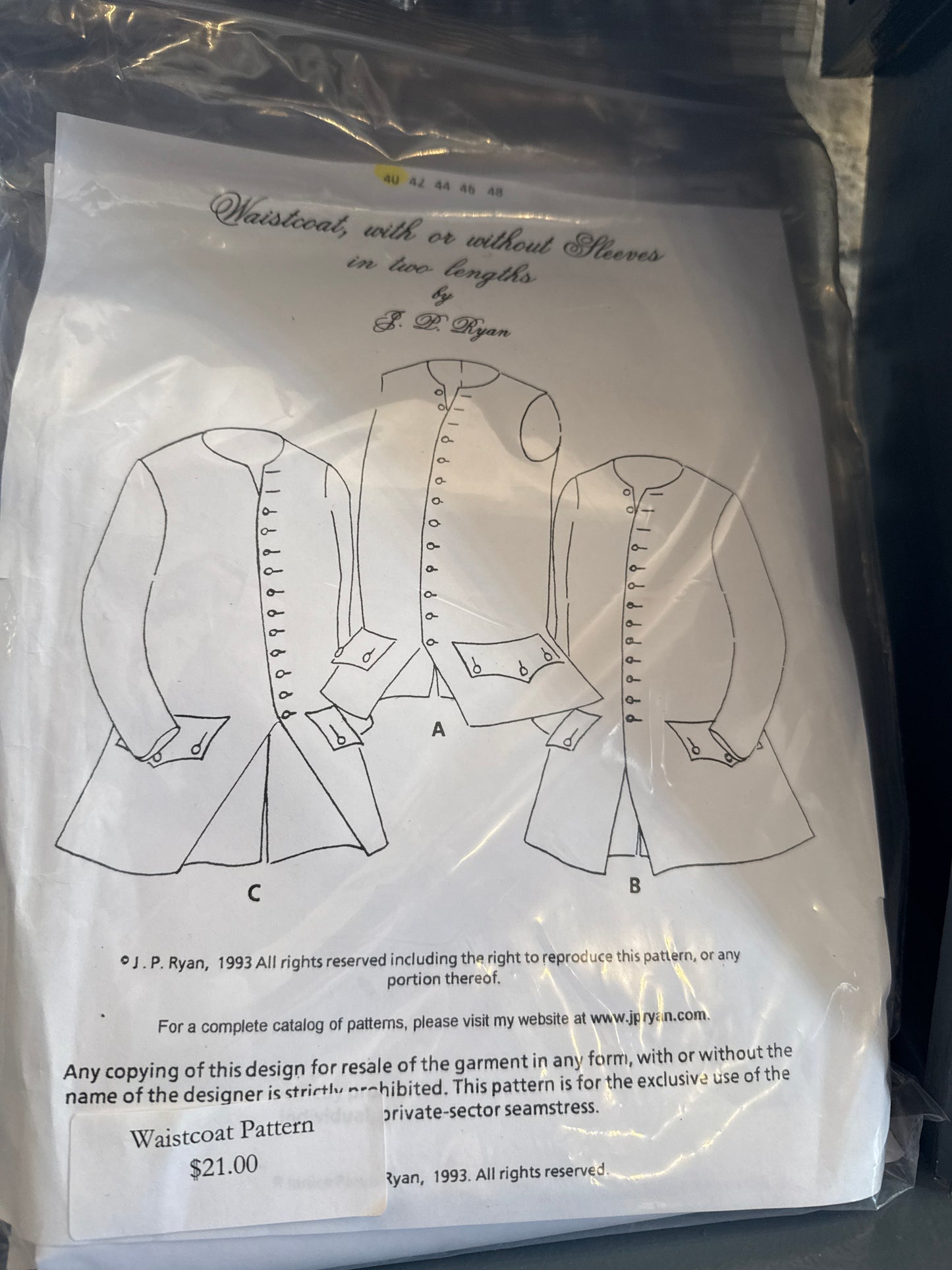
JP Ryan's Men's Waistcoat Pattern Sleeved or Un sleeved
A mid-18th century waistcoat to be made in long or short versions, with or without sleeves, with three different center front lines, depending on period and personal preference. Suitable for 1750’s – 1770’s. Available in sizes 40 -48, one size per pattern.
Pattern recommended by Les Amis du Fort de Chartres Interpretive Program for authentic French Habitant reenactment.
From head to toe: The habitant man on an average workday wore a hat or cap, a neck handkerchief, a shirt, waistcoat, coat, breeches, stockings with garters to hold them up, and shoes (either soled leather shoes with buckles, moccasin-like leather shoes called souliers de bouef, or wooden sabots). If engaged in manual labor, he may have taken off his coat and waistcoat, but would have been considered unclothed and not fit for company in just his shirt. In summer he might have worn a straw hat, and in winter a knitted toque (stocking cap) and a heavy capot (hooded coat). Gaiters of wool or leather leggings could be used to cover the stockings during hard labor, hunting, or in cold weather.
Likely fibers: Linen was frequently the layer next to the skin for its moisture-wicking properties and washability, protecting outer clothes from sweat and body oil, but cotton muslin shirts have also been documented for the area. Blends of cotton, linen, wool and silk were used for common breeches, waistcoats, and coats, with fabric names in local inventories such as “Petersburg,” “Camlet,” or “Bassin” (Brown). These could be woven in a heavy or light weight, smooth with a suede finish or in harder-wearing serge, depending on the season and use for which they were intended. Men’s stockings of wool and silk are also frequently mentioned in inventories.
Share